Mobile apps have become an important digital channel for businesses, startups, organizations, and service providers. From e-commerce and banking to healthcare, education, travel, and on-demand services, a well-designed mobile application can make it easier for customers to interact with a business and access its products or services.
But developing an app involves much more than writing code. You need to define the right features, choose the appropriate technology, design a simple user experience, build a reliable backend, test the application, publish it, and maintain it after launch.
One of the first questions businesses usually ask is: How much does mobile app development cost? The answer depends on the app’s complexity, features, platform, design, integrations, and development requirements.
This guide explains the mobile app development process, cost factors, technologies, essential features, development timeline, and how to choose the right mobile app development company. If you’re planning an app for your business, it will also help you understand what to consider before starting the project.
What Is Mobile App Development?
Mobile app development is the process of designing, building, testing, deploying, and maintaining applications for smartphones and tablets.
Depending on the target audience and business requirements, an application may be developed for Android, iOS, or both platforms. Businesses can also choose between native development and cross-platform technologies.
A complete mobile application typically involves several components:
- Mobile app interface and user experience
- Backend application and business logic
- Database
- APIs
- Authentication and security
- Third-party integrations
- Push notifications
- Analytics
- Testing and quality assurance
- App Store and Google Play deployment
- Ongoing maintenance
Professional mobile app development therefore combines business strategy, UI/UX design, software engineering, testing, and ongoing support.
How Does Mobile App Development Work?
A typical application connects several systems.
For example, when a customer places an order through an e-commerce app, the mobile interface communicates with the backend through APIs. The backend processes the request, stores information in a database, communicates with payment or other third-party services, and returns the required information to the app.
This architecture allows businesses to build applications that are more than simple mobile interfaces. They can become complete digital platforms for managing customers, transactions, content, services, and business operations.
What Types of Mobile Apps Can Businesses Build?
Almost any business process that benefits from mobile access can potentially become part of a mobile application.
Common examples include:
- E-commerce applications
- Food delivery applications
- Hotel and travel applications
- Booking and appointment applications
- Healthcare applications
- Education and e-learning applications
- Real estate applications
- Finance and fintech applications
- Logistics applications
- Fitness applications
- Social networking applications
- Enterprise and internal business applications
- On-demand service applications
The right type of application depends on the business model, target users, and problem the product is intended to solve.
Why Is Mobile App Development Important for Businesses?
A mobile app can become an important part of a company’s digital strategy when it provides a clear benefit to customers or employees.
Instead of relying only on a website or physical interaction, businesses can use an application to create a direct, convenient channel for their users.
Improve Customer Engagement
Mobile apps can provide customers with a convenient way to interact with a business. Features such as personalized content, notifications, accounts, order tracking, and loyalty programs can encourage users to return to the application.
Create a Better Customer Experience
An application can be designed around a specific customer journey.
For example, a booking application can allow users to search, select a service, choose a date, make a payment, and receive confirmation without navigating through unrelated website pages.
Increase Sales and Revenue
E-commerce, subscription, booking, and service applications can create additional sales channels.
Businesses can also use mobile applications to promote products, offer personalized experiences, and simplify purchasing.
Build Customer Loyalty
Features such as loyalty programs, saved preferences, personalized offers, purchase history, and notifications can help businesses build longer-term relationships with customers.
Automate Business Operations
Mobile applications are not only useful for customers.
Businesses can also build internal applications for:
- Employee management
- Field operations
- Inventory
- Sales
- Delivery
- Reporting
- Customer management
- Workflow approvals
The result can be a more efficient business process and better access to real-time information.
Gain Valuable Customer Insights
When implemented with appropriate analytics and privacy practices, applications can provide businesses with useful information about user behavior, engagement, and product performance.
This information can help businesses make better product and marketing decisions.
Types of Mobile App Development
The best development approach depends on the target platforms, performance requirements, budget, timeline, and functionality of the application.
Android App Development
Android is one of the most widely used mobile platforms globally and is particularly important for businesses targeting users in markets where Android devices have a large presence.
Android applications can be built using native technologies or cross-platform frameworks.
A business may choose Android-first development when its primary audience uses Android devices or when it wants to validate the product before expanding to other platforms.
iOS App Development
iOS app development focuses on Apple’s ecosystem, including iPhone and iPad applications.
Businesses targeting iOS users may benefit from a native application designed specifically around Apple’s platform and user experience.
For products targeting international or higher-value customer segments, iOS can also be an important platform to consider.
Cross-Platform App Development
Cross-platform development allows developers to build applications for multiple platforms from a shared codebase.
Frameworks such as Flutter and React Native can be appropriate for many business applications because they can reduce duplicated development work and help businesses launch on multiple platforms more efficiently.
However, cross-platform development is not automatically the right choice for every project. Applications with highly specialized platform requirements may benefit from native development.
Native vs Cross-Platform App Development
The right choice depends on your application.
| Factor | Native Development | Cross-Platform Development |
|---|---|---|
| Performance | Excellent | Very good for many applications |
| Platform-specific features | Excellent | Depends on framework and requirements |
| Code sharing | Limited | High |
| Development approach | Platform-specific | Shared codebase |
| Best suited for | Highly platform-specific applications | Many business and startup applications |
| Potential development efficiency | Lower for two platforms | Higher for many projects |
A professional development team should recommend the approach based on your requirements rather than choosing a technology simply because it is popular.
How Much Does Mobile App Development Cost?
There is no single price for mobile app development.
A simple application with a few screens and basic functionality is very different from a marketplace, banking application, logistics platform, or enterprise system with multiple user roles, payment processing, real-time features, and a custom backend.
The cost is normally influenced by:
- App complexity
- Number of features
- UI/UX requirements
- Platforms
- Backend architecture
- API integrations
- Payment gateways
- Third-party services
- Admin dashboards
- Security requirements
- Testing
- Deployment
- Ongoing maintenance
For that reason, a reliable development company should understand your requirements before providing a final quotation.
Mobile App Development Cost by App Complexity
A useful way to think about app development pricing is by complexity rather than by the word “app” itself.
| App Complexity | Typical Characteristics |
|---|---|
| Basic | Limited screens, simple content, basic forms or utility features |
| Medium | User accounts, APIs, database, notifications, dashboards, payments or other integrations |
| Complex | Multiple user roles, real-time functionality, advanced backend, payments, maps, chat or complex workflows |
| Enterprise | Large-scale systems, advanced integrations, analytics, security, multiple platforms and complex business processes |
The actual cost of each project should be estimated after reviewing its requirements.
Mobile App Development Cost in Nepal
The mobile app development cost in Nepal varies considerably depending on project scope.
Current Nepal-based development guides show broad pricing ranges rather than one market-wide fixed price. Recent published estimates range from a few hundred thousand Nepalese rupees for simpler applications to several million rupees for complex platforms.
This variation is expected because a basic business application and a multi-sided marketplace have completely different development requirements.
For businesses in Nepal, the most useful approach is to define the required features first and then obtain a project-specific estimate.
If you’re comparing quotes from different mobile app development companies in Nepal, make sure you compare what is included—not just the final price.
A lower quotation may exclude UI/UX design, backend development, testing, deployment, maintenance, or important integrations.
What Factors Affect Mobile App Development Cost?
Number and Complexity of Features
Every additional feature can require design, development, testing, backend work, and maintenance.
For example, basic login is relatively straightforward, while a system involving multiple roles, two-factor authentication, payment processing, notifications, and account management requires significantly more work.
UI/UX Design
A professional application requires more than attractive screens.
Designers need to consider:
- User flows
- Navigation
- Accessibility
- Screen sizes
- Interaction patterns
- Error states
- Forms
- Loading states
- Visual consistency
A more customized experience generally requires more design and development effort.
Platform Choice
Building for one platform may require less development work than creating separate native applications for both Android and iOS.
Cross-platform technologies can also reduce duplicated development work in suitable projects.
Backend Development
Applications that require user accounts, transactions, databases, dashboards, reporting, or complex business logic need a reliable backend.
Backend development can therefore represent a significant portion of the overall project.
API and Third-Party Integrations
Integrations can include:
- Payment gateways
- Maps
- Social login
- SMS
- Analytics
- CRM systems
- Accounting systems
- Shipping services
- Cloud services
Each integration needs development and testing.
Testing and Quality Assurance
Professional testing helps identify:
- Functional problems
- Performance issues
- Device compatibility problems
- Security vulnerabilities
- UI issues
- Crashes
Testing becomes especially important as an application’s complexity increases.
Maintenance and Updates
App development does not end when the application is published.
Operating systems, devices, third-party APIs, security requirements, and business requirements change over time.
Businesses should therefore plan for ongoing maintenance and updates.
How to Reduce Mobile App Development Costs
Reducing cost should not mean removing important quality controls.
Instead, businesses can reduce unnecessary development by:
- Defining requirements before development begins
- Prioritizing essential features
- Starting with an MVP where appropriate
- Using a suitable cross-platform approach when it makes sense
- Reusing proven components
- Avoiding unnecessary features in the first release
- Testing early
- Planning future integrations from the beginning
A well-defined project can reduce expensive changes later in development.
What Is the Mobile App Development Process?
A structured development process helps turn an initial idea into a reliable application.
The exact process varies by company and project, but a professional mobile application typically goes through the following stages.
1. Discovery and Requirement Analysis
The first step is understanding the business problem.
The development team should identify:
- Target users
- Business goals
- Core features
- User journeys
- Platforms
- Integrations
- Security requirements
- Technical constraints
The objective is to define what needs to be built before development starts.
2. Project Planning
Once requirements are clear, the project can be divided into features, milestones, and technical tasks.
The team can then determine:
- Technology stack
- Development approach
- Project scope
- Timeline
- Team requirements
- Testing strategy
- Deployment requirements
3. UI/UX Design
Design transforms requirements into an experience users can understand and navigate.
The process may include:
- User flows
- Wireframes
- Prototypes
- Visual design
- Interactive prototypes
- Design systems
Good mobile UI/UX should make important actions easy to discover and complete.
4. Mobile App Development
Developers then build the application according to the approved design and technical plan.
This may include:
- Frontend development
- Backend development
- Database development
- Authentication
- Business logic
- API development
- Third-party integrations
5. API and Third-Party Integration
Many applications depend on external systems.
For example, an e-commerce application may need payment processing, while a logistics application may require maps and location services.
The development team needs to integrate these systems securely and test how they interact with the application.
6. Testing and Quality Assurance
Before launch, the application should be tested across relevant devices and scenarios.
Testing can include:
- Functional testing
- Usability testing
- Performance testing
- Compatibility testing
- Security testing
- Regression testing
The objective is to identify and fix problems before users encounter them.
7. App Store and Google Play Deployment
Launching an application involves more than uploading a file.
The development team may need to prepare:
- App information
- Screenshots
- Icons
- Store descriptions
- Privacy information
- Technical configuration
- Release builds
The application can then be submitted to the appropriate app marketplace.
8. Maintenance and Updates
After launch, the application needs ongoing attention.
Maintenance may include:
- Bug fixes
- Security updates
- Operating system compatibility
- Performance improvements
- API updates
- New features
- User-requested improvements
A long-term maintenance plan helps keep the application reliable as the technology environment changes.
How Long Does It Take to Develop a Mobile App?
The development timeline depends on scope and complexity.
Webtech Nepal states that its typical mobile app projects take around 8 to 16 weeks, while simple applications can take less time and complex applications may require longer.
A general planning model looks like this:
| App Type | Approximate Development Consideration |
|---|---|
| Simple app | Shorter development cycle |
| Medium-complexity app | Several development phases |
| Complex application | Longer design, development and testing |
| Enterprise platform | Multi-phase development and deployment |
The timeline can change based on:
- Number of platforms
- Number of features
- UI/UX complexity
- Backend requirements
- API integrations
- Payment systems
- Real-time functionality
- Testing requirements
- Client feedback and approvals
A clear requirements document at the beginning can help prevent unnecessary delays.
Essential Features of a Modern Mobile App
Not every application needs the same features.
The best feature set depends on the target users and business model.
User Registration and Authentication
Depending on the application, users may register using email, phone number, social login, or other authentication methods.
Push Notifications
Notifications can help businesses communicate important updates, reminders, promotions, order statuses, and other information.
They should be used carefully so they provide value rather than becoming a source of annoyance.
Search and Filters
Search and filtering are particularly important for e-commerce, real estate, travel, booking, and marketplace applications.
Payment Integration
Applications that sell products or services may need secure payment processing.
The appropriate payment provider depends on the target market and business requirements.
Location and Maps
Location functionality can be useful for:
- Delivery
- Transportation
- Travel
- Real estate
- Nearby services
- Field operations
In-App Messaging or Chat
Chat can be useful when users need direct communication with businesses, service providers, support teams, or other users.
Analytics and Reporting
Analytics can help businesses understand usage, engagement, conversion, and other important product metrics.
Admin Dashboard
Many applications require a web-based or administrative interface for managing:
- Users
- Products
- Orders
- Content
- Payments
- Reports
- Notifications
Security Features
Security should be considered from the beginning of development.
Depending on the application, this may involve:
- Secure authentication
- Access controls
- Data protection
- Secure API communication
- Input validation
- Secure storage
Technologies Used in Mobile App Development
Technology should be selected according to project requirements.
Native Technologies
Native Android development can use technologies such as Kotlin, while native iOS development can use Swift.
Native development can be appropriate when an application needs deep platform-specific functionality or maximum platform optimization.
Cross-Platform Technologies
Frameworks such as Flutter and React Native allow developers to create applications for multiple platforms using shared code.
Webtech Nepal’s mobile app development service page specifically identifies Flutter, React Native, and Kotlin among its technologies.
Backend Technologies
A mobile application may also require backend technologies for:
- APIs
- Authentication
- Database management
- Business logic
- File storage
- Notifications
- Analytics
- Administration
The appropriate backend depends on the application’s scale and technical requirements.
How to Choose the Right Technology Stack
The technology stack should be based on:
- Required features
- Performance requirements
- Target platforms
- Development timeline
- Budget
- Scalability
- Third-party integrations
- Long-term maintenance
There is no single technology that is best for every application.
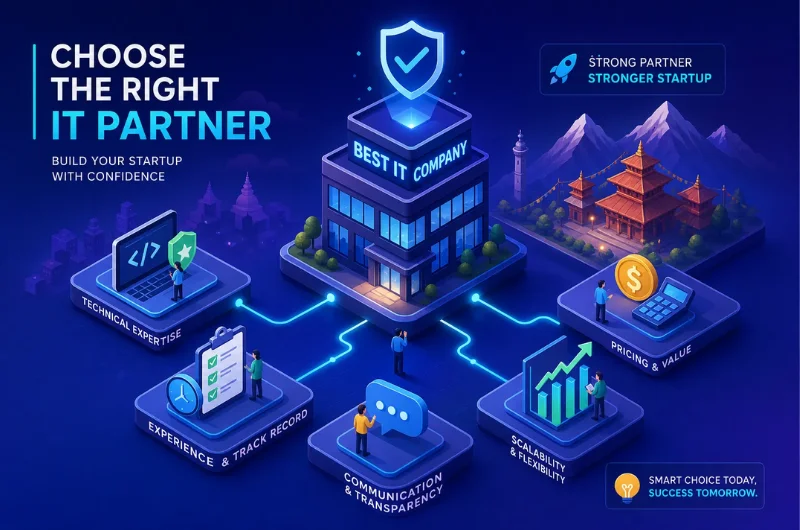
How to Choose the Right Mobile App Development Company
Choosing the right development partner can have a significant impact on your project’s cost, quality, timeline, and long-term success.
Review Their Portfolio
Start by examining previous projects.
Look for evidence that the company has experience with applications similar to what you want to build.
Pay attention to:
- UI/UX quality
- Functionality
- Industry experience
- Technical complexity
- App performance
Check Technical Expertise
A development company should have appropriate expertise for your project.
Ask about:
- Android
- iOS
- Flutter
- React Native
- Backend development
- APIs
- Cloud infrastructure
- Security
- Testing
Look for Relevant Industry Experience
An agency that has worked with similar business models may understand common challenges more quickly.
For example, an e-commerce application has different requirements from a healthcare or logistics application.
Understand Their Development Process
Ask how the company manages:
- Requirements
- Design
- Development
- Testing
- Communication
- Deployment
- Maintenance
A transparent process makes it easier to track progress and manage expectations.
Compare Pricing and Project Scope
Do not choose a development company only because it offers the lowest price.
Instead, compare:
- Features included
- UI/UX design
- Backend development
- Testing
- Deployment
- Documentation
- Maintenance
- Support
Two quotations with different scopes are not directly comparable.
Ask About Post-Launch Support
Find out what happens after the application launches.
Ask whether the company provides:
- Bug fixes
- Security updates
- OS compatibility updates
- Performance improvements
- Technical support
- New feature development
Check Reviews and Client Feedback
Client feedback can provide insight into communication, reliability, project management, and support.
Where possible, look for reviews that discuss actual project experiences rather than relying only on star ratings.
Ask About Source Code and Ownership
Before starting a project, clarify:
- Who owns the source code?
- How is the code delivered?
- Who owns design assets?
- What happens if you change development partners?
- What documentation will you receive?
Clear ownership terms can prevent problems later.
Mobile App Development in Nepal
Businesses in Nepal are increasingly using digital products to serve customers, manage operations, and create new online services.
Mobile applications can be particularly useful for sectors such as:
- E-commerce
- Tourism
- Hospitality
- Healthcare
- Education
- Real estate
- Finance
- Logistics
- Retail
- On-demand services
The local market also has its own technical and business considerations, including payment services, connectivity, target devices, local customer behavior, and business workflows.
Why Businesses in Nepal Are Investing in Mobile Apps
A mobile application can provide a direct digital channel between a business and its customers.
For example:
- A retailer can provide mobile shopping.
- A hotel can manage bookings.
- A school can provide learning resources.
- A healthcare organization can provide appointments.
- A logistics company can manage delivery operations.
- A service business can provide booking and customer communication.
The most important question is not simply whether your competitors have an app.
Instead, ask:
What problem will the application solve for your customers or business?
What Should You Look for in a Mobile App Development Company in Nepal?
When evaluating a development partner, consider:
- Relevant portfolio
- Technical expertise
- Clear communication
- Transparent project scope
- UI/UX capabilities
- Testing process
- App deployment experience
- Post-launch support
- Security practices
- Understanding of your business requirements
A local development partner can also make communication and collaboration easier for businesses operating in Nepal.
Choosing a Kathmandu-Based App Development Team
For businesses based in Kathmandu or elsewhere in Nepal, working with a local development company can provide practical advantages such as easier communication, local business understanding, and accessible support.
However, location should not be the only selection criterion. Technical capability, portfolio, development process, communication, and long-term support should all be evaluated.
Looking for a Mobile App Development Company?
If you have an application idea, the first step is to define the business problem, target users, and core features.
Webtech Nepal provides mobile app development for Android and iOS, including native and cross-platform applications using technologies such as Flutter, React Native, and Kotlin. Its service offering covers the development lifecycle from concept and design through deployment and ongoing support.
Webtech Nepal’s service page also highlights experience across sectors including retail, healthcare, tourism, banking, education, and other business applications.
If you’re looking for a mobile app development company in Nepal, you can discuss your requirements with the Webtech Nepal team and request a project estimate.
What Can a Mobile App Development Team Help With?
Depending on your project, development support can include:
- App strategy and requirements
- UI/UX design
- Android development
- iOS development
- Cross-platform development
- Backend development
- API integration
- Payment integration
- Testing and QA
- App Store and Google Play deployment
- Maintenance and updates
Have a mobile app idea? Discuss your app project with Webtech Nepal and get a development plan based on your requirements.
Start Your Mobile App Development Project
A successful mobile application starts with a clear understanding of the problem it needs to solve.
Before approaching a development company, prepare as much information as possible about:
- Your target customers
- The problem you want to solve
- Core features
- Preferred platforms
- Business model
- Existing systems
- Required integrations
- Expected timeline
You don’t need a complete technical specification before speaking with a development company. A good development partner can help you turn the initial idea into a practical technical plan.
If you’re ready to move forward, explore Webtech Nepal’s mobile app development services or contact the team to discuss your application requirements.
Frequently Asked Questions About Mobile App Development
How much does mobile app development cost?
Mobile app development cost depends on the application’s complexity, features, platforms, UI/UX requirements, backend, integrations, testing, and maintenance requirements. A simple application can require significantly less development work than a complex platform with payments, real-time functionality, multiple user roles, and a custom backend. The best way to get an accurate estimate is to define the project requirements and request a customized quotation.
How much does mobile app development cost in Nepal?
The cost of mobile app development company in Nepal varies widely according to project scope. Current published Nepal market guides show estimates ranging from a few hundred thousand NPR for simpler applications to several million NPR for complex platforms. The actual cost depends on features, platforms, design, integrations, backend requirements, and testing.
How long does it take to develop a mobile app?
The timeline depends on the complexity of the application. Webtech Nepal states that its typical mobile app projects take approximately 8 to 16 weeks, while simple applications may take less time and more complex applications may take longer. Requirements, number of platforms, integrations, design complexity, testing, and feedback can all affect the final timeline.
Should I develop an Android or iOS app first?
The answer depends on your target audience. If most of your target users are on Android, starting with Android may make sense. If your target market is strongly concentrated among iOS users, an iOS-first strategy may be appropriate. Businesses targeting both platforms can also consider cross-platform development where it fits the product requirements.
What is the difference between native and cross-platform app development?
Native development builds applications specifically for an operating system, while cross-platform development allows developers to share more code between platforms. Native development can be preferable for highly platform-specific requirements, while cross-platform development can be an efficient choice for many business applications. The right approach depends on the application’s technical requirements.
Is Flutter good for mobile app development?
Flutter can be a strong choice for many mobile applications because it supports development for multiple platforms from a shared codebase. However, no framework is automatically right for every project. The decision should consider performance requirements, integrations, platform-specific functionality, development resources, and long-term maintenance.
What features should a mobile app have?
Features should be based on the business model and user journey. Common features include authentication, search, notifications, payments, maps, messaging, analytics, and an administrative dashboard. An MVP should generally focus on the features needed to deliver the core value rather than trying to include everything in the first version.
How do I choose the right mobile app development company?
Review the company’s portfolio, technical expertise, development process, client feedback, pricing structure, communication practices, and post-launch support. Also clarify source-code ownership, project scope, deliverables, testing, deployment, and maintenance before signing an agreement.
Do mobile apps require ongoing maintenance?
Yes. Mobile applications often require ongoing maintenance because operating systems, devices, third-party APIs, security requirements, and business needs change over time. Maintenance can include bug fixes, compatibility updates, security improvements, performance optimization, and new features.
Can a mobile app development company handle UI/UX design and backend development?
Many full-service development companies can handle the complete lifecycle, including requirements, UI/UX design, frontend development, backend development, API integration, testing, deployment, and maintenance. Webtech Nepal states that it provides end-to-end mobile app development and UI/UX design services.
Final Thoughts
Mobile app development is not simply about building an application and publishing it to an app store. A successful product requires clear requirements, thoughtful UX, appropriate technology, reliable development, thorough testing, and ongoing improvement.
The cost and timeline depend on what you are building. A simple business application may have a relatively straightforward development process, while an e-commerce platform, marketplace, healthcare system, or enterprise application can require significantly more planning and engineering.
If you’re considering mobile app development in Nepal, focus first on the problem you want to solve and the users you want to serve. Then choose a development partner based on technical capability, relevant experience, communication, transparency, and long-term support—not simply the lowest quotation.
Ready to turn your app idea into a working product? Explore Webtech Nepal’s mobile app development services and discuss your project requirements with the team.